

How Often Should You Change Your Oil? Myth vs. Reality
Wondering how often to change oil? Forget the 3,000-km myth. Most modern vehicles need service every 8,000 to 16,000 km. Master Mechanic provides honest, warranty-approved advice on synthetic or conventional oils, ensuring your engine runs perfectly for your driving confidence.
For many drivers in Southern Ontario, knowing exactly how often to change oil can feel like a moving target. You might remember a time when the “3,000-kilometre rule” was the gold standard for every car. However, recent advancements in automotive technology have changed the landscape of vehicle maintenance.
Our technicians at Master Mechanic recommend an oil change every 8,000 to 16,000 kilometres. The exact timing for your vehicle depends on three primary factors:
- Your vehicle’s age
- The type of oil used
- Your specific driving habits (such as frequent short trips).
At Master Mechanic, we believe in providing honest advice you can act on, rooted in our 40-year history of trust, fairness, and respect. We debunk oil change myths and explain why understanding your vehicle’s oil change intervals is the first step in extending your engine’s life.
Debunking the 3,000 Kilometre Myth
The idea that you need frequent oil swaps every 3,000 kilometres is largely a relic of the past. New vehicles and modern engine oils are designed to last much longer than those of decades ago.
Many automakers now adjust their recommended schedule based on sophisticated sensors that monitor oil quality and driving habits. While the 3,000-km rule helped avoid problems in older cars, following it today might just mean you’re spending money unnecessarily.
Conventional Oil vs. Synthetic Oil
The type of oil you use in your crankcase significantly affects your oil change frequency.
- Conventional Oil: This mineral-based oil is common in older automobiles. It typically requires a higher oil change frequency, often every 5,000 to 7,500 kilometres.
- Synthetic Oil: Most modern systems require synthetic oil. While synthetic oil costs more upfront, it doesn’t break down as quickly as conventional options. You can often follow a range of 10,000 to 16,000 kilometres between oil changes.
Using the right oil filter is just as important as using the right oil. A high-quality oil filter traps contaminants that would otherwise circulate through your engine.
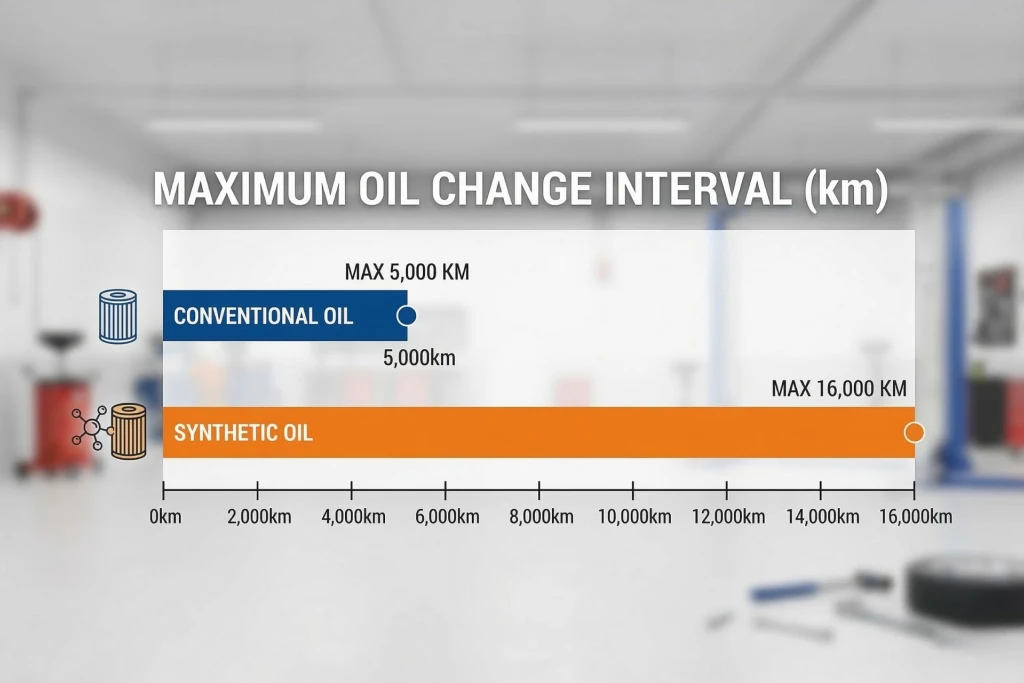
Image Source: Gemini 2026
The Canadian Factor: Winnipeg and Portage la Prairie
In Canada, “normal” driving often qualifies as “severe” by a manufacturer’s standards. This is especially true for drivers in Winnipeg and Portage la Prairie, where freezing temperatures are the norm for many months of the year.
Winnipeg winters mean your vehicle’s oil takes longer to reach its ideal flow temperature. Short trips in cold weather prevent the engine from reaching a temperature high enough to evaporate condensation. This moisture can degrade the oil and lead to serious problems if you stick to a standard summer schedule.
If you live in Portage la Prairie or Winnipeg, a higher oil change frequency during the winter is often a wise choice to protect your components.
Monitoring Your Car’s Oil Between Services
Don’t forget to check your oil level manually between your visits to the service centre. Even new vehicles can consume a small amount of oil. Pull the dipstick to inspect the oil’s colour and texture.
What oil colours, textures, and levels meanFresh oil is usually a transparent amber. If the oil’s colour is black or dark brown, it’s been doing its job by catching soot and debris. However, if the texture feels gritty or the oil level is consistently low, it’s time to change your oil at a trusted auto service shop. |
Why Skipping Oil Changes is Costly
Waiting too long to change oil is a gamble that rarely pays off. Over time, oil loses its ability to lubricate and cool the engine. It can eventually turn into a thick sludge that clogs internal systems. Worst case can mean engine replacement, which can be a financial catastrophe.
That’s why our master mechanics recommend at least two oil changes a year, or roughly every six months, regardless of how many kilometres you’ve driven. This way, a technician can catch small issues before they become serious problems, saving you from preventable expenses.
Learn more: Ask A Master Mechanic: What If I Don’t Change My Oil?
Service Centre vs. Dealership: Where to Get an Oil Change
Many drivers feel they must return to the dealership for oil changes to keep their warranty valid. This is not the case. Master Mechanic provides warranty-approved auto service that meets all manufacturer requirements, including oil change.
And as a community-minded, locally owned business, we take pride in how we treat the environment. Every drop of used oil and every old oil filter is disposed of responsibly.
FAQs About How Often to Change Oil
While conventional oil usually needs to be replaced every 5,000 km, synthetic oil can often last 10,000-16,000 km. However, your driving habits and the manufacturer’s recommendations in your owner’s manual are the final authority.
No, car repair shops that offer warranty-approved service, like Master Mechanic, can also do oil changes. Our technicians ensure your vehicle’s oil is changed according to the manufacturer’s exact standards, but without the high cost of a dealership visit.
Check your oil level and the oil’s colour regularly. If the texture is gritty or the colour is very dark, visit a service centre. Fresh oil is vital to prevent engine problems.
Freezing temperatures and short trips prevent the engine from reaching temperatures high enough to evaporate condensation. This can degrade oil quality, requiring more frequent oil changes.
Key Takeaways
- Trust the manual, not the myth: Modern automotive technology has made the 3,000 km rule a relic; always check your owner’s manual for your specific model’s requirements.
- Oil type dictates frequency: Synthetic oil typically allows for longer oil change intervals, often up to 16,000 km, while conventional engine oils require more frequent auto service.
- Severe weather matters: Drivers in Winnipeg or Portage la Prairie should consider a higher oil change frequency due to freezing temperatures and frequent short trips.
- Warranty-approved protection: Regular oil changes and the use of the right oil filter help prevent serious problems like engine sludge while keeping your manufacturer’s warranty fully intact.
Trust the Experts at Master Mechanic
Determining how often you should change your oil shouldn’t be a guessing game. Whether you’re navigating Winnipeg traffic or taking the highway through the GTA, we’re here to provide the support you need.
Is your vehicle ready for fresh oil?
Go and book Your Appointment at your local Master Mechanic today for a warranty-approved oil change with guidance you can actually trust.